
How AI Detects Buyer Intent in Real Time
AI-driven behavioral tracking, predictive analytics, and NLP identify high-intent B2B buyers in real time to improve targeting and conversion rates.
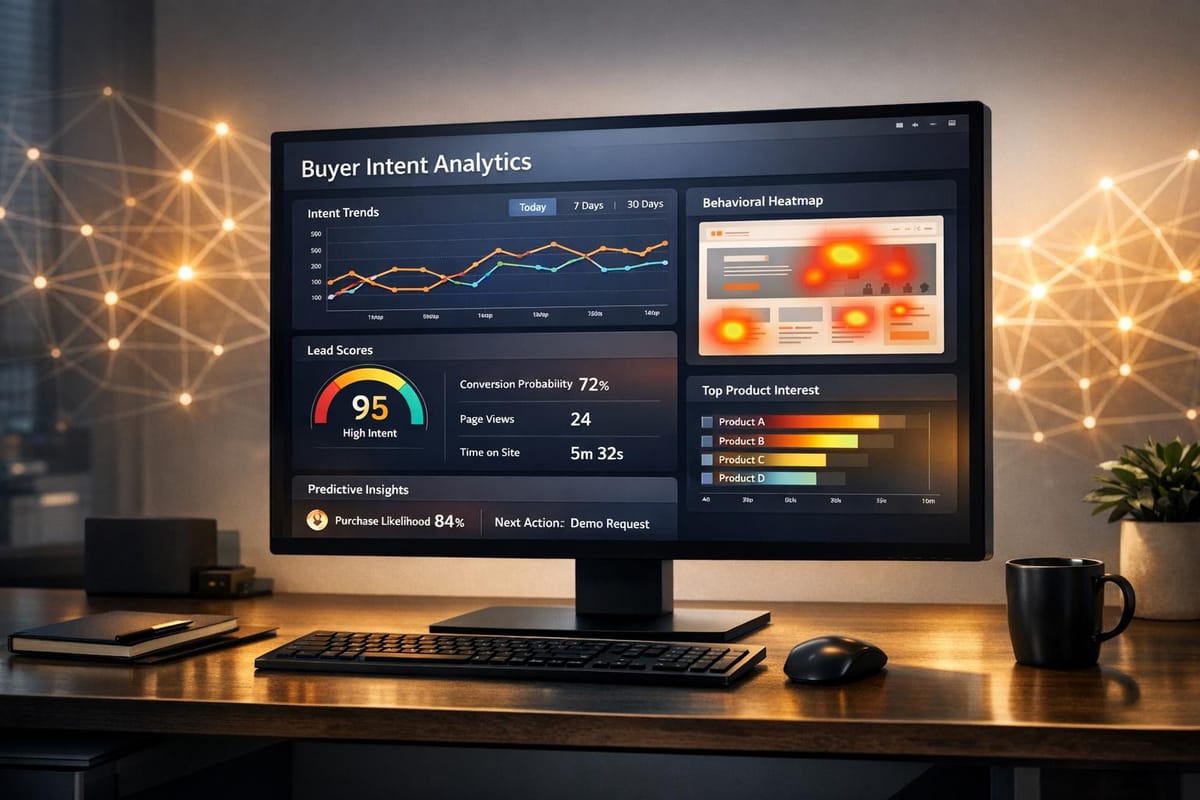
In the fast-paced world of B2B sales, timing is everything. Research shows that reaching out to a buyer first can increase closing rates to 80%, compared to just 10% for those who delay. Additionally, with 84% of buyers choosing the first seller they engage with, businesses must act swiftly to identify and connect with high-intent prospects. Yet, only 10% of the total addressable market is actively in-market at any given time, leaving companies to navigate a complex web of buyer signals scattered across multiple channels.
In this article, you'll discover:
- How AI leverages behavioral tracking, predictive analytics, and natural language processing (NLP) to detect buyer intent with over 85% accuracy.
- The key behavioral signals, such as website activity and content engagement, that AI systems analyze to differentiate serious prospects from casual browsers.
- Real-world examples of companies using AI-driven intent data to improve conversion rates by up to 30% and shorten sales cycles by 30%.
For businesses aiming to optimize sales strategies and reduce wasted resources, understanding AI-powered intent detection is no longer optional. With the B2B intent data market projected to reach $1.5 billion by 2025, the time to act is now. Read on to learn how your business can leverage these insights to gain a competitive edge.
How to Use Intent Signals to Find Ready-to-Buy Leads | Shira Simmonds x Smartlead

AI Methods for Real-Time Intent Detection
Artificial Intelligence employs three primary techniques to identify buyer intent in real time: behavioral tracking, predictive analytics, and natural language processing (NLP). Together, these methods analyze user actions, predict future behavior, and interpret text-based cues across various platforms - all within just 100 milliseconds.
Traditional indicators like visits to pricing pages or form submissions often fall short in accuracy. For instance, 88% of visitors with high intent never look at the pricing page, and among those who do, 94% aren’t actual buyers. While many conventional tools offer intent signals with less than 20% accuracy, advanced AI methods can achieve over 85% accuracy, even for anonymous visitors.
Below, we explore how each technique contributes to real-time intent detection.
Behavioral Tracking
AI platforms monitor a visitor’s actions in real time by analyzing their "event stream pattern", which includes navigation paths, content engagement, and overall activity. With data from billions of past interactions, AI can predict purchase likelihood within just five clicks, using only on-site behavior. Based on these insights, visitors are categorized into groups such as "likely-to-buy", "on-the-fence", or "unlikely-to-buy", allowing businesses to respond with tailored actions immediately.
Some systems go a step further by employing micro-behavioral analysis, which evaluates hundreds of individual signals from each visitor. This pattern recognition approach provides highly accurate forecasts of conversion likelihood. For example, a case study showed that prioritizing high-intent form fills for direct sales and nurturing lower-intent leads yielded impressive results. High-intent form fills generated 17.25 times more revenue per lead than lower-intent ones. Additionally, 1,476 high- and mid-intent visitors who didn’t fill out a form still produced 2.3 times more revenue than a larger group of low-intent leads. These strategies led to a 71% increase in chat conversions and a 13% rise in web-shop revenue within just 60 days.
Predictive Analytics
Predictive analytics leverages historical data and real-time insights to forecast buyer behavior and purchase intent. By analyzing thousands of variables - such as firmographics, engagement history, technographics, and external signals - AI builds dynamic intent profiles that identify accounts most likely to convert. These models continuously adapt using machine learning, incorporating new data and adjusting to changing market conditions. This enables businesses to anticipate customer needs and fine-tune their outreach for better results.
One SaaS provider implemented an AI-driven intent platform that combined website tracking, third-party signals, and predictive analytics. This strategy shortened sales cycles by 30%, increased win rates by 20%, and allowed sales teams to dedicate 40% more time to high-intent accounts. Another enterprise used AI to predict lead quality and timing, resulting in a 60% uptick in qualified leads, a 25% reduction in outreach time, and a 35% improvement in deal velocity.
Natural Language Processing (NLP)
NLP adds another layer of insight by analyzing text-based signals to uncover buyer intent. This includes data from social media, emails, job postings, company updates, and chat interactions. Techniques like sentiment analysis, topic modeling, named entity recognition, and intent classification help identify actionable cues. For instance, phrases like "pricing options", "integration timeline", or "case study availability" are flagged as indicators of interest, prompting personalized responses.
In 2024, a leading UK retail and commercial bank adopted an AI-powered NLP system to enhance its chat platform. The result? A 150% jump in satisfaction for certain customer queries. Additionally, companies utilizing AI-driven intent data have seen up to a 30% increase in email response rates by converting NLP-detected signals into tailored outreach.
Behavioral Signals AI Systems Monitor
AI systems leverage a wide range of behavioral signals across multiple channels to gauge buyer intent in real-time. These signals are the backbone of intent detection and generally fall into two categories: first-party data from owned platforms like websites and emails, and third-party data from external activities such as search behavior. By analyzing both what a prospect does and why they do it, machine learning models compare current actions against past high-conversion patterns. This layered approach connects basic behavioral tracking to more advanced predictive insights.
Website Activity and Page Visits
Website behavior offers some of the most telling intent signals. AI systems track visits to high-priority pages like pricing, demo, contact forms, and product feature pages. Metrics such as the number of pages viewed per session, scroll depth, time spent on content, and repeat visits are closely monitored. Advanced platforms go even further, analyzing hundreds of micro-behaviors, such as hover patterns and click sequences, to pinpoint genuine interest. This level of detail helps separate serious prospects from casual browsers.
Content Engagement
How prospects interact with content provides another layer of insight into their intent. AI tools assess actions such as downloading whitepapers, case studies, or product guides, as well as viewing videos and attending webinars. High-value actions - like completing a full demo or downloading a pricing guide - signal significantly stronger intent than quickly skimming a blog post. These interactions, processed in real-time, build out a detailed intent profile for each prospect.
Email Engagement
Email activity adds depth to buyer intent analysis. Platforms track metrics like open rates, click-through rates, link clicks, and response patterns. Timing and frequency are especially revealing; for example, multiple opens and clicks on product-specific links within a short time frame (e.g., 48 hours) suggest active research. When combined with website and content engagement data, email signals help paint a clearer picture of whether a prospect is moving closer to a purchase decision or simply gathering information.
Search Query Analysis
Search queries often indicate early-stage buyer interest and can provide context for why a prospect might be considering a purchase now. When integrated with other data points, search behavior helps refine sales strategies, shifting them from reactive to proactive. However, interpreting search data in isolation can lead to missteps, so it’s crucial to combine it with other signals and AI-driven analysis for a more accurate understanding. With the B2B intent data market projected to reach $1.5 billion by 2025, and 91% of marketers using intent data to tailor content for specific accounts, search queries are becoming an essential part of intent forecasting.
Together, these behavioral signals feed into machine learning models that continuously improve the accuracy of buyer intent predictions, giving businesses a sharper edge in identifying and engaging with potential customers.
How Machine Learning Models Predict Intent
Machine learning models take the behavioral signals we’ve discussed and transform them into actionable insights about buyer intent. By processing vast amounts of data, these models decode complex behaviors, uncovering the "why" behind actions and predicting what buyers are likely to do next. Unlike traditional systems, machine learning algorithms enrich this process by incorporating factors like firmographics, engagement history, technographics, and external signals to generate real-time intent profiles .
AI algorithms analyze vast amounts of behavioral data in real time to identify subtle patterns and signals that humans might miss. They continuously learn from new data, refining predictions dynamically. This leads to more precise identification of prospects who are actively considering a purchase.
This approach allows for advanced pattern recognition, continuous adaptation, and highly effective predictive modeling.
Pattern Recognition
One of the greatest strengths of machine learning lies in its ability to spot subtle patterns that indicate genuine buying intent. For instance, these models can detect spikes in research activity - when an account suddenly increases its focus on specific categories - and analyze patterns in content engagement that signal heightened interest in purchasing .
This capability goes beyond merely tracking behavior. By analyzing the type of content consumed, machine learning models can pinpoint where a prospect is in their buying journey. For example, engagement with educational resources often signals early-stage research, whereas interactions with comparison guides or implementation-focused materials suggest a prospect is nearing a decision. By examining the sequence and context of these engagements, the models refine intent profiles, helping sales teams prioritize leads more effectively.
Continuous Learning Loops
Unlike static systems that rely on fixed rules, machine learning models continuously adapt to shifts in buyer behavior and market trends. Each new data point contributes to updating buyer intent scores in real time, ensuring predictions remain accurate and relevant. This constant evolution is critical for staying aligned with changing dynamics.
This adaptability shines when market conditions fluctuate. Platforms with continuous learning mechanisms can recalibrate their qualification criteria based on real-world outcomes, while outdated systems relying on fixed rules often fail to capture new buyer behaviors. In the fast-paced world of B2B sales, where factors like economic shifts or competitive pressures can alter buying patterns overnight, this flexibility is invaluable.
Predictive Modeling
Predictive modeling brings everything together - pattern recognition and continuous learning - to forecast future buyer actions. By analyzing thousands of variables from diverse sources - such as first-party website data, second-party partner data, and third-party intent signals - these models determine which accounts are most likely to make a purchase and when .
Natural Language Processing (NLP) further enhances these models by extracting buying signals from unstructured text, such as social media posts, uncovering cues that traditional methods might overlook. By aggregating and analyzing data in real time, predictive models provide sales teams with a powerful edge, enabling them to identify and engage high-intent prospects more effectively. Systems like RINDA leverage these insights to power real-time buyer intent detection, offering practical applications for global sales outreach.
RINDA's Real-Time Buyer Interest Verification

RINDA takes predictive insights and transforms them into actionable tools to simplify global buyer engagement. By leveraging AI, RINDA empowers businesses to navigate international markets with ease. From identifying potential buyers to managing communication and tracking performance, the platform automates the entire offline sales process, addressing common hurdles in cross-border engagement.
AI-Powered Buyer Discovery
RINDA's AI scans global markets to uncover potential buyers who show genuine interest in making a purchase. By analyzing firmographic data and verifying buyer credibility, RINDA creates detailed profiles of prospects from various regions. This real-time verification ensures sales teams focus on leads actively seeking solutions, rather than wasting time on cold prospects. For companies exploring new markets, this targeted approach simplifies outreach and complements earlier predictive methods.
Multilingual Communication and Automated Strategies
Expanding into international markets often means navigating language barriers and cultural nuances. RINDA supports over 20 languages, allowing businesses to engage buyers in their native languages for a more personal connection. The platform goes beyond basic translation by crafting customized engagement strategies tailored to each buyer’s profile, industry, and regional context. With AI-generated personalized emails and automated follow-up sequences based on buyer responses, RINDA ensures communication stays relevant and impactful.
Performance Insights and Strategy Refinement
To help businesses fine-tune their outreach efforts, RINDA tracks key performance metrics like email engagement and campaign success rates. These insights allow sales teams to assess what’s working and make informed adjustments to their strategies. By continuously analyzing and optimizing performance, RINDA supports businesses in refining their international sales approaches for greater success.
Comparison of AI Detection Methods

Comparison of AI Buyer Intent Detection Methods: Behavioral Tracking vs Predictive Analytics vs NLP
When it comes to refining sales outreach strategies, understanding the strengths and limitations of various AI detection methods is essential. Each approach offers unique insights into buyer intent, helping businesses tailor their strategies to achieve better outcomes.
Behavioral tracking offers quick insights by analyzing first-party website data in real time. This method provides an immediate view of visitor actions, such as page visits or form submissions, which can be valuable for identifying potential leads. However, its accuracy can be limited when relying on traditional signals like pricing page visits or form completions, which often show less than 20% accuracy. The main drawback is that while behavioral tracking reveals "what" users are doing, it doesn’t explain "why" they’re doing it or how their actions align with past high-converting behaviors.
Predictive analytics adds valuable context by comparing current user behavior to historical data, offering insights into the likelihood of intent. However, its success hinges on the quality of the data it processes. If predictive models are based on inaccurate or incomplete engagement metrics, they can amplify misleading signals, resulting in poorly prioritized leads and wasted marketing resources.
NLP (Natural Language Processing) provides deeper qualitative insights by analyzing unstructured text from sources like reviews, forums, social media, and conversations - often referred to as the "dark funnel". This approach uncovers buyer sentiments and pain points that quantitative methods might miss. Despite its potential, NLP's effectiveness depends heavily on the quality and scope of the textual data available. Additionally, it raises concerns around privacy compliance and ethical issues, particularly when analyzing public conversations.
Each method brings its own strengths and challenges, making it crucial for businesses to weigh these factors when selecting the right tools for their sales strategies.
Conclusion and Future Outlook
AI-driven intent detection is reshaping the sales landscape by identifying high-value prospects with precision, moving beyond traditional metrics. This technology allows businesses to spot potential buyers earlier in their journey, craft highly personalized messaging, and streamline prospecting efforts. The result? A sharper focus on leads that align with the Ideal Customer Profile and are actively seeking solutions in the market.
Looking ahead, AI systems are poised to deliver even greater predictive accuracy. As these systems continuously learn from new data and adapt to changing buyer behaviors, their ability to fine-tune intent predictions will only improve. Additionally, by tapping into shared signal intelligence across larger ecosystems, businesses can gain a more nuanced and reliable understanding of buyer intent. This approach could address persistent issues like data quality concerns and false positives.
That said, challenges remain. Traditional signals often struggle with accuracy, leading to wasted resources and missed opportunities. With some platforms processing over a trillion signals daily, managing and analyzing such vast amounts of real-time data is a significant technical hurdle. Furthermore, the lack of transparency in "black-box models" complicates understanding AI-driven decisions, while ensuring seamless integration with existing sales and marketing tools remains a pressing need.
Ethical considerations will also play a pivotal role as these technologies advance. Businesses must prioritize compliance with data protection laws and maintain transparency about how data is collected and used. Striking a balance between precise targeting and respecting individual privacy is essential for deploying these tools responsibly. These ethical concerns go hand in hand with the sophisticated predictive methods discussed earlier.
In the ever-evolving AI landscape, companies that tackle these challenges head-on and effectively implement advanced intent detection will position themselves to convert high-value prospects more effectively, gaining a competitive edge in the marketplace.
FAQs
How does AI accurately detect buyer intent in real time?
AI can pinpoint buyer intent with an accuracy exceeding 85% by examining real-time user behavior - including clicks, scrolling habits, time spent on specific pages, and other interactions. Leveraging machine learning models trained on vast datasets, it detects subtle patterns that suggest when a visitor is nearing a purchase decision.
This instant data processing allows businesses to prioritize promising leads, tailor their sales strategies, and drive higher conversion rates with precision.
What ethical concerns should businesses consider when using AI to detect buyer intent?
Using AI to gauge buyer intent in real time brings up several ethical challenges that businesses must address thoughtfully. One of the most pressing issues is privacy. Tracking and analyzing user behavior often involves handling sensitive information. Companies need to establish clear, accessible policies detailing how data is collected, stored, and utilized. Just as important, users should have the ability to opt out of data collection when appropriate, ensuring their autonomy and trust are respected.
Another challenge lies in the risk of bias amplification. AI systems can inadvertently reflect or even magnify biases present in their training data, which could lead to unfair or skewed outcomes. To mitigate this, businesses should prioritize regular reviews to identify and reduce bias, maintain transparency about how their AI models function, and include human oversight in critical decision-making processes.
Finally, transparency and accountability are essential for maintaining ethical standards. Users deserve to know when their actions are being analyzed, and businesses must adhere to privacy regulations and ethical guidelines. Tools like RINDA are stepping up to these challenges by incorporating privacy safeguards and consent mechanisms directly into their AI platforms, allowing companies to expand their global sales reach without compromising ethical principles.
How can businesses use AI to identify buyer intent and improve their sales strategies?
Businesses can use AI to uncover buyer intent by examining digital behavior patterns such as page views, time spent on product pages, search terms, and click paths. AI analyzes this data in real time, assigning an intent score that helps pinpoint prospects actively considering a purchase.
To make this part of your sales strategy, begin by gathering behavioral data from your website and other customer interaction points. AI tools can then assign intent scores to leads, which can be integrated into your CRM or sales platforms. This setup ensures your sales team gets instant notifications when a prospect shows high buying intent, enabling timely and customized follow-ups. AI can even assist in crafting personalized messages or suggesting meeting times, improving engagement and accelerating deal closures.
For offline sales, tools like RINDA streamline lead identification, support multilingual communication, and analyze performance, transforming potential leads into actionable opportunities. By incorporating AI-driven intent detection, businesses can better align sales and marketing efforts, enhance productivity, and achieve higher ROI.
Related Blog Posts
- From 95% Out-of-Market to Pipeline Gold: How Real-Time Buyer Intent Data Transforms B2B Lead Discovery
- How AI Alerts Boost Sales Performance Tracking
- From Cold Calls to AI Agents: How B2B Sales Hit 82% Higher Conversions with Personalization at Scale
- Intent Data Revolution: B2B Buyers Leave 600% More Digital Footprints Than 2020